
Author: Joretha

  • The Wonders of Sensory Play

    The Wonders of Sensory Play

    Sensory play is a crucial part of early childhood development. Even before they are born, babies are designed to explore the world through their senses. Engaging in sensory play helps to fine-tune motor skills, improve coordination and increase curiosity. Sensory play involves activities that stimulate a child’s senses of touch, smell, taste, sight and hearing, providing a rich environment for active learning and growth.

    Why sensory play matters

    Children are naturally designed to explore the world through their senses. Participating in sensory play enhances motor skills, boosts coordination and fosters greater curiosity and exploration. It also aids in language development as children articulate their experiences and emotions in relation to their observations and interactions.

    Activities for different ages

    0 – 3 Months: For newborns, sensory play can be quite gentle. Activities might include soft music, gentle stroking of different textures against the baby’s skin or slowly moving colourful and contrasting objects in their field of vision. These activities stimulate the senses of hearing, touch and sight, which are crucial for early brain development.

    3 – 6 Months: At this stage, babies benefit from tactile play. Activities like feeling different textures, exploring soft and hard objects or experiencing the contrasts between warm and cool surfaces are beneficial.

    6 – 12 Months: Babies start to explore more with their hands and mouths. Offer them safe items they can chew, shake or bang together, such as rubber toys, textured balls and musical instruments.

    1 – 3 Years: Introduce activities involving sand, water or even edible paints made from food colouring. These experiences help toddlers learn cause and effect as well as basic concepts like wet, dry, heavy and light.

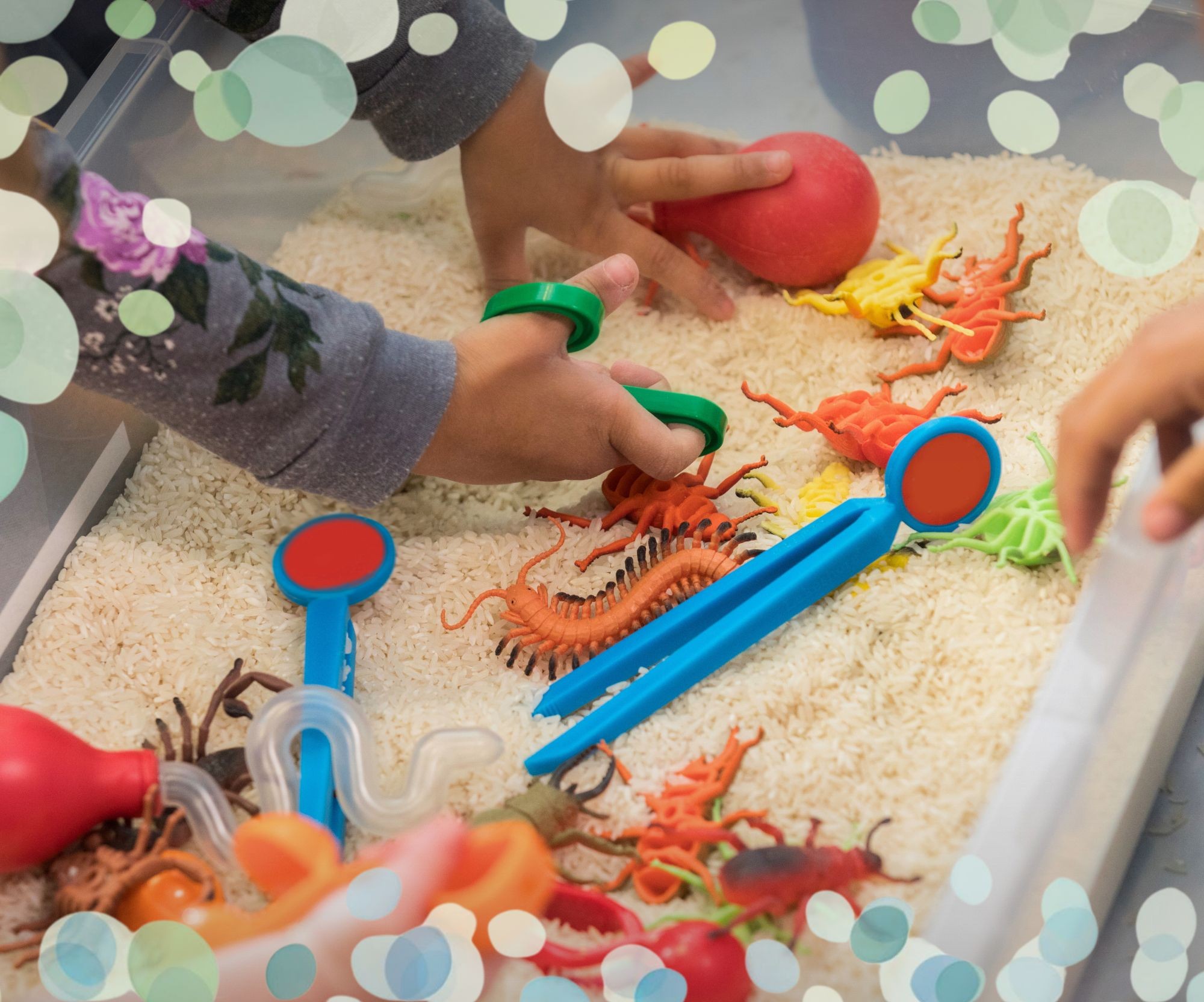
    3 – 5 Years (Pre-Grade R): At this age, children are ready for more complex sensory toys and materials. Mix elements such as rice, pasta, water beads or kinetic sand with tools for scooping, pouring and measuring to enhance their cognitive and physical skills.

    Benefits of sensory play

    Sensory play is not only about having fun but is also an educational experience that supports emotional regulation and cognitive development. It encourages children to experiment and solve problems, building the foundations for scientific thinking and reasoning. Additionally, sensory activities are known to have a calming effect on children, particularly those with sensory integration issues.

    Incorporating sensory play from an early age can provide children with essential experiences that contribute to their development. By stimulating the senses from birth, children can learn and develop their skills in a playful and engaging way.

  • Die Wonders van Sensoriese Spel

    Die Wonders van Sensoriese Spel

    Sensoriese spel is ‘n kritieke deel van vroeë kinderontwikkeling. Van selfs voor geboorte is kinders ontwerp om die wêreld deur hulle sintuie te verken. Deelname aan sensoriese spel help om motoriese vaardighede te verfyn, koördinasie te verbeter en nuuskierigheid en verkenning aan te moedig. Hierdie tipe spel behels aktiwiteite wat ‘n kind se sintuie van aanraking, reuk, smaak, sig en gehoor stimuleer en bied ‘n ryk omgewing vir aktiewe leer en ontwikkeling.

    Waarom is sensoriese spel belangrik?

    Kinders is gemaak om die wêreld deur hulle sintuie te verken. Deelname aan sensoriese spel bevorder motoriese vaardighede, verbeter koördinasie en bevorder groter nuuskierigheid en verkenning. Dit help ook met taalontwikkeling namate kinders hul ervarings en emosies oor hul waarnemings verwoord.

    Aktiwiteite vir verskillende ouderdomme

    0 – 3 Maande: Vir pasgeborenes fokus sensoriese spel op sagte aanraking, rustige klanke en visuele stimulasie. Eenvoudige aktiwiteite, soos om sagkens die baba se vel te streel, rustige musiek te speel of hoë-kontras swart en wit patrone te wys, kan help om hulle ontwikkelende sintuie te stimuleer.

    3 – 6 Maande: Op hierdie stadium baat babas by taktiele spel. Aktiwiteite soos om verskillende teksture te voel, sagte en harde voorwerpe te verken of die kontraste tussen warm (liggaamstemperatuur) en koue oppervlaktes te ervaar is voordelig.

    6 – 12 Maande: Babas begin meer met hulle hande en monde verken. Bied vir hulle groot, veilige items aan wat hulle kan kou, skud of teen mekaar kan slaan, soos rubber speelgoed, balle met verskillende teksture of geskikte musiekinstrumente.

    1 – 3 Jaar: Stel aktiwiteite voor wat sand, water of selfs eetbare verf, gemaak van voedselkleursel, behels. Hierdie ervarings help kleuters om oorsaak-en-gevolg beginsels te leer, sowel as basiese konsepte soos nat, droog, swaar en lig.

    3 – 5 Jaar (Pre-Graad R): In hierdie fase is kinders gereed vir meer komplekse sensoriese speelgoed en materiale. Meng elemente soos rys, pasta, krale of kinetiese sand met gereedskap vir skep, giet en meet om hulle kognitiewe en fisiese vaardighede te verbeter.

    Voordele van sensoriese spel

    Sensoriese spel gaan nie net oor pret nie, maar is ook ‘n opvoedkundige ervaring wat emosionele regulering en kognitiewe ontwikkeling ondersteun. Dit moedig kinders aan om te eksperimenteer en probleme op te los, wat die grondslag lê vir wetenskaplike denke en redenering. Verder het sensoriese aktiwiteite ‘n kalmerende effek op kinders, veral dié met sensoriese integrasie probleme.

    Deur kinders van ‘n vroeë ouderdom af aan sensoriese spel bloot te stel, gee vir hulle blootstelling aan noodsaaklike ervarings wat bydra tot hulle ontwikkeling. Deur die sintuie te stimuleer, kan kinders van geboorte af reeds leer en vaardighede op ‘n spelende en boeiende manier ontwikkel.